
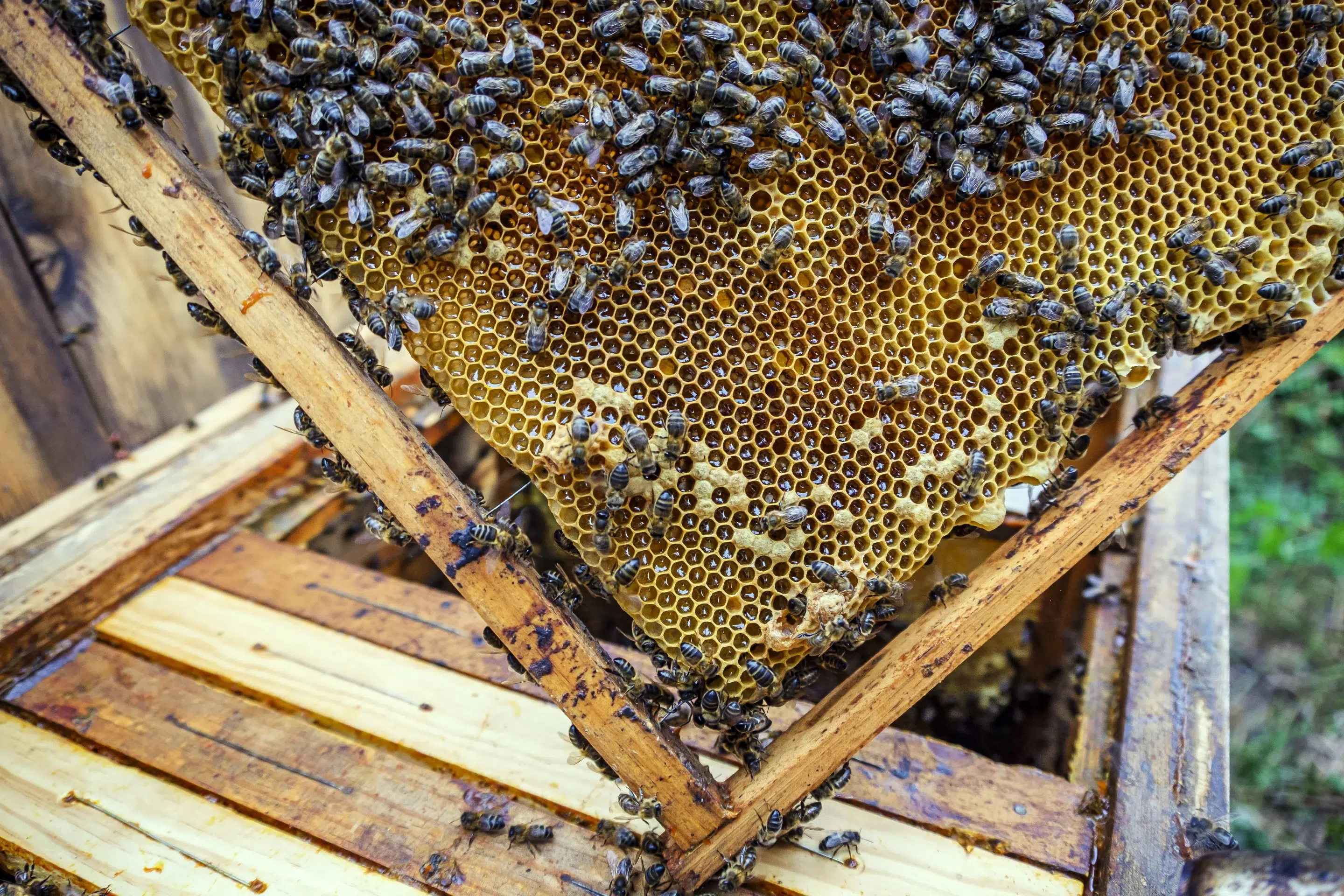
When you open a hive and spot queen cells, you’re seeing a high-stakes moment in your colony’s life. Reading those cells correctly tells you whether the bees are replacing a lagging queen or preparing to reproduce and leave the hive. Getting the diagnosis right protects brood production and honey yield. As beekeepers like you, Guardian Bee Apparel knows the importance of keeping informed about the state of your hive, which is why we’re happy to help inform newbie beekeepers and remind long-time beekeepers of what to look out for when they spot a queen cell.
What Is a Queen Cell?
A queen cell is a peanut-shaped, vertically oriented cell built to raise a new queen. You may also see queen cups—small, acorn-like starters. A cup becomes a charged queen cell once you spot an egg or larva in royal jelly. Location and number offer clues: bottom or edge-of-frame cells commonly point to swarming, whereas mid-frame (comb-face) cells often indicate supersedure; neither rule is absolute. Timing matters too: after capping around day 8–9, a virgin queen typically emerges near day 16, so plan inspections with that window in mind. Working slowly enough to check whether a cell is truly charged is easier when your veil stands off your face and your suit breathes.
What Does a Supersedure Mean?
Supersedure is an in-place queen replacement. Hives usually begin to produce these due to age, injury, or a poor laying pattern. You’ll often find only a few cells on the comb face while the colony otherwise looks stable. Confirm you still have eggs or young brood, avoid heavy disruption, and generally allow the process to proceed unless you have a clear reason to requeen. Deliberate frame handling is key here. You want to be able to move without rushing or struggle. One of our light-colored, three-layer, ventilated suit with elasticated cuffs and long gauntlet gloves can assist in this process, as its lightweight feel makes precise movements far easier compared to bulky beekeeping suits.
What Does a Swarm Mean?
A swarm is colony reproduction. The old queen leaves with a large number of bees when the hive is congested or a nectar flow is booming. You’ll usually see multiple swarm cells—often along the frame bottoms. You’ll also notice backfilling and crowding. Your best response to this is to relieve congestion by adding supers, opening the brood nest appropriately, or making a split; if you manage cells, leave one or two of the best and check again in 7–9 days. Because swarm inspections involve handling heavy boxes and working with more bees in the air, a sting-resistant, ventilated suit with a wide-view veil helps you move confidently and safely.
How Should a Beekeeper Handle a Swarm?
Before swarming, act quickly when you see charged queen cells and classic swarm indicators, such as crowding. Add space early, adjust the brood nest, or split the colony so you control where the bees go.
When a swarm issues, stay calm—clustered swarms are typically docile—then place a nuc or box beneath the cluster, give a firm shake or gentle brush, and close once you see fanning.
After capture, provide a drawn comb or foundation and good ventilation. Feed if forage is thin, and verify you’re queen-right within a week.
Supersedure vs. Swarm
Fewer, mid-frame cells with a steady colony usually point to supersedure and a light-touch, monitor-and-wait approach. Many bottom-edge cells in a crowded hive signal a swarm impulse that calls for space, splits, or careful cell management.
Mistakes to Avoid
Don’t treat every queen cup like a crisis! Confirm it’s charged before acting. Avoid destroying all supersedure cells in a hive that’s simply trying to replace a failing queen. And don’t delay action once swarm cells are widespread; the clock is already ticking. The most common cause of errors is a rushed inspection.
Why the Right Suit Changes the Outcome
Identifying a queen cup versus a queen cell, confirming emergency queen cells, and deciding whether to supersedure or swarm all hinge on careful observation under heat and pressure. A Guardian Bee Apparel ventilated suit maintains high airflow while maintaining a sting-safe gap. Covered zippers, elastic cuffs, and ankle closures seal entry points, and our varied veil options preserve visibility without sacrificing protection, allowing you to read cells accurately. Durable stitching and reinforced wear zones ensure you stay on track through swarm season and beyond.
Working with swarm cells is stressful enough—don’t let poor gear add to it. Our ventilated suits are designed for long inspections in hot weather. If your current suit isn’t treating you right, take a search through our ventilated suits, jackets, pullovers, and pants for all of your protection and comfort needs.