
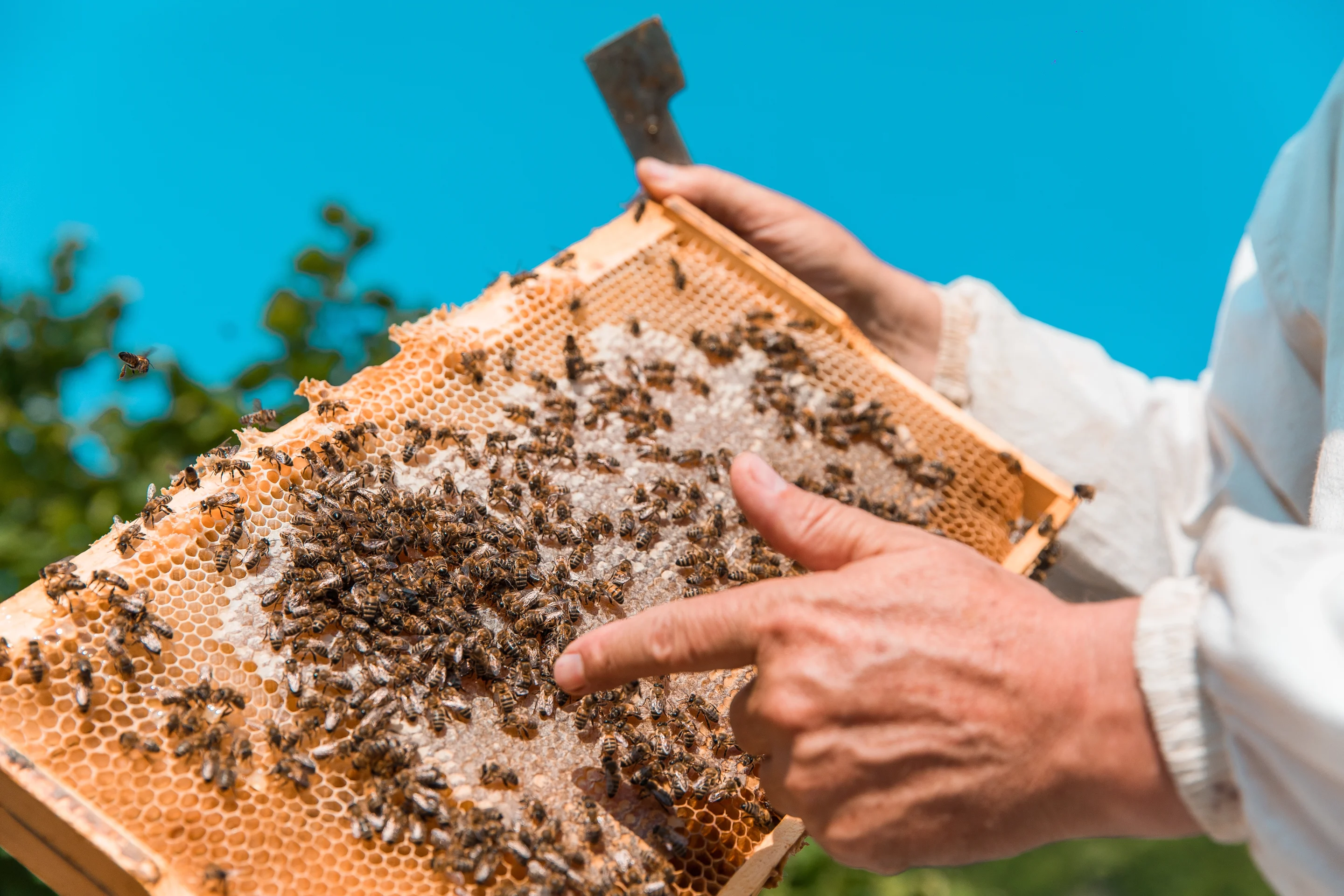
It is also a job that asks you to lean over open boxes, work with steady hands, and stay calm while the hive reacts to you handling its most important bee. Your tools matter, but so does what you are wearing. Good protective gear, such as the
ventilated beekeeping suits
Guardian Bee Apparel is happy to provide, can make the entire process smoother and less stressful.
Why Beekeepers Mark the Queen Bee
Beekeepers mark queens for practical, day-to-day management reasons:
- Finding the queen faster. A bright mark on the queen’s thorax helps her stand out from thousands of workers. That means shorter inspections and less time with the colony open.
- Tracking queen age. The color of the mark tells you which year the queen was installed. This makes it easier to decide when it may be time to requeen and to connect changes in brood pattern or productivity with queen age.
- Monitoring performance. When you can reliably identify the queen, it is easier to follow her laying pattern, confirm the presence of eggs, and understand whether issues in the hive are queen-related or not.
- Documenting genetics. For anyone working with specific lines, visible marks help you track individual queens and maintain records of their lineage and performance.
With a marked queen, inspections tend to be faster, more precise, and more confident.
Understanding Queen Marking Colors (International Color Code)
Most beekeepers follow an international color code that rotates every five years. The last digit of the year determines which color you use:
- Years ending in 1 or 6: White
- Years ending in 2 or 7: Yellow
- Years ending in 3 or 8: Red
- Years ending in 4 or 9: Green
- Years ending in 5 or 0: Blue
A common way to remember this is the phrase “Will You Raise Good Bees,” where the first letter of each word matches the colors in order.
Because most queens live three to four years, these five colors are enough to tell you roughly how old almost any queen in your apiary is. Many beekeepers keep a printed color chart in their bee shed or journal for quick reference.
Safety First: Protective Gear for Queen Bee Marking
Any time you open a hive, protective clothing is part of good practice. When you handle the queen directly, it’s even more important. You want to be deliberate rather than rushed, and you should avoid sudden movements that could agitate the bees.
Benefits of a Ventilated Bee Suit
A well-made ventilated suit allows air to pass through multiple layers of mesh while still creating a barrier against stings. This is especially helpful in warm climates or during peak season, when inspections are frequent and temperatures are high.
During queen marking, that comfort pays off in a few ways:
- You are less likely to overheat during longer inspections.
- You can focus on the queen and your technique instead of thinking about how hot you are.
- It is easier to move slowly and intentionally when you are not fighting heat stress.
Features That Help During Queen Marking
Several details in your apparel setup can make queen marking feel more controlled:
- Clear-view veil. A veil that keeps mesh away from your face and minimizes fogging helps you see fine details on the comb, which is critical when you are trying to spot an unmarked queen or a tiny dot of paint.
- Good mobility and fit. Elastic at the waist and cuffs, reinforced seams, and thoughtful tailoring allow you to bend, reach, and lift boxes without feeling restricted.
- Protective but flexible gloves. Gloves that provide sting protection while still allowing you to hold a pen, queen cage, or clip give you better control during the actual marking.
Guardian Bee Apparel designs ventilated suits and veils with these kinds of tasks in mind, so the gear supports the work you are doing instead of getting in the way.
Tools and Supplies Needed to Mark a Queen Bee
To mark a queen, you will typically need:
- A queen marking pen or water-based, non-toxic paint pen intended for bees.
- A queen marking cage, tube, or plunger-style device to hold her safely while you mark.
- A queen clip (optional) to help you catch and transfer her from the frame to the cage.
- A small piece of paper or scrap surface to test the pen and control the amount of paint.
- Your usual inspection tools, such as a smoker and hive tool.
- A ventilated bee suit, veil, and gloves for protection and comfort while you focus on the queen.
You do not need an elaborate setup. The key is using safe, appropriate paint and a method that lets you handle the queen gently and confidently.
When Is the Best Time to Mark a Queen Bee?
The best time to mark a queen is when she is settled, mated, and laying steadily. Many beekeepers choose to mark queens:
- After they are fully mated and have an established brood pattern.
- On a day with mild, stable weather.
- At a time when the colony is not already stressed by robbing, dearth, or major disturbance.
Planning around weather and colony temperament helps you mark the queen in a calm hive, which makes the process easier on both you and the bees.
How to Mark a Queen Bee: Step-by-Step
Step 1: Prepare Your Gear
Before opening the hive:
- Test your marking pen on a scrap surface to ensure it produces a small, controlled dot.
- Set out the cage, pen, clip, and smoker where you can reach them easily.
- Suit up in your ventilated bee suit, veil, and gloves.
The more organized you are, the less fumbling you will do in front of an open hive.
Step 2: Inspect the Hive and Locate the Queen
Work through the brood nest as you usually would. Look for:
- A longer abdomen than the workers.
- A slightly different walking pattern.
- Workers who form a loose circle facing her as she moves.
A clear, unobstructed view through your veil makes those subtle differences easier to pick up, which often means you find the queen sooner.
Step 3: Gently Capture the Queen
Once you find her, you can:
- Scoop her gently into a queen clip from the frame, or
- Place a marking cage over her on the comb and let her walk up into it.
With a plunger-style tube, the queen walks up until she reaches the mesh at the top. You then use the plunger to move her gently against the mesh, keeping her in place without crushing or pinching.
The goal is to restrain her just enough to apply the mark, with as little stress as possible.
Step 4: Apply the Queen Marking Paint
With the queen secure and her thorax visible:
- Touch the pen lightly to the top of the thorax, between where the wings attach.
- Aim for a small dot, about the size of a sesame seed.
- Avoid the eyes, wings, head, and abdomen.
Water-based, non-toxic pens made explicitly for queen marking are the safest choice. Avoid markers that use harsh solvents or strong fumes, as those can be harmful.
Step 5: Let the Paint Dry
Hold the queen in the cage briefly to allow the paint to dry. If you release her immediately, the mark may smear as workers groom her or as she moves across the comb.
Give the paint a minute or two to set. When the mark is no longer shiny, it is usually safe to return her.
Step 6: Return the Queen to the Hive
When you are ready:
- Gently release the queen onto a brood frame with open cells.
- Watch how the workers respond. They should gather around her and behave normally, not ball or attack her.
Once you are confident she is moving well and being accepted, you can reassemble the hive and close it up.
Common Mistakes and How to Avoid Them
Like any hive task, queen marking involves practice. Some common mistakes include:
- Using too much paint. Large blobs can run onto wings or eyes. Testing the pen first and aiming for a small dot helps prevent this.
- Applying too much pressure. Squeezing the queen too tightly in a cage or between fingers can injure her. Using tools with built-in stops or soft surfaces helps reduce that risk.
- Using unsuitable markers. Not all pens are safe for bees. Sticking to queen-specific, water-based pens avoids unnecessary chemicals.
- Not allowing enough drying time. Releasing her while the paint is still wet increases the chance of smearing or odd worker behavior.
- Rushing because the hive feels “hot.” Working too quickly is usually when mistakes happen.
Good technique, paired with calm, deliberate movements, goes a long way. Comfortable, protective clothing supports that calm approach.
Final Thoughts: Make Queen Marking Part of Comfortable, Confident Beekeeping
Marking your queen makes inspections faster, record-keeping clearer, and long-term colony management easier. With the right tools, thoughtful timing, and a careful touch, it becomes a quick, routine part of working your hives.
If you are ready to add queen marking to your management routine, take a moment to make sure your gear is supporting you. Guardian Bee Apparel’s ventilated suits and accessories are built with real hive work in mind, so you can focus on reading your bees and doing the kind of detailed, hands-on tasks that keep your colonies healthy.